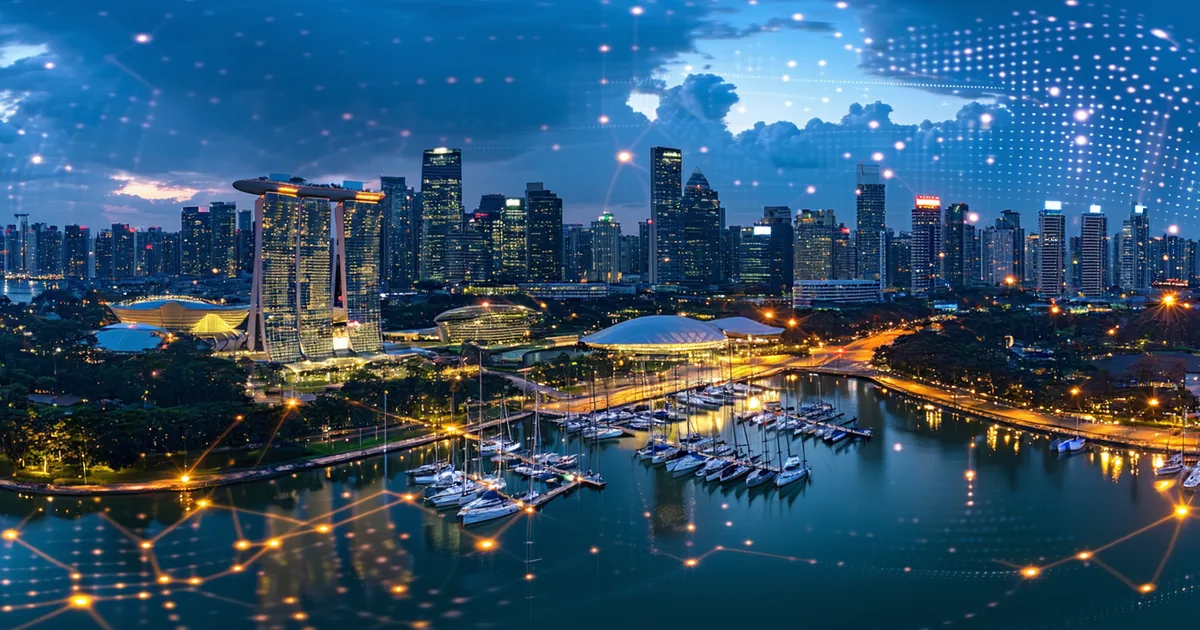
When we incorporated Sogni AI in Singapore in 2023, the decision wasn't primarily about tax incentives or incorporation ease — though both are genuinely favorable here. It was about where the intersection of talent, infrastructure, and market access made sense for what we were building. Two years of operating from Marina View has reinforced that instinct, and I want to share the specific factors that make Singapore a credible base for creative AI companies building for global markets.
I'll be upfront about the limits of this perspective: I'm writing as a founder based here, not as an independent analyst. I'll try to be clear about what's genuinely structural versus what might be specific to our situation.
The Regulatory Environment for AI: Specific and Consequential
Singapore's approach to AI regulation has been notably different from both the EU's precautionary model (comprehensive binding legislation first, implementation second) and the US approach (sector-specific guidelines with limited federal coordination). The Infocomm Media Development Authority (IMDA) and the Personal Data Protection Commission (PDPC) have taken a principles-based approach anchored in the Model AI Governance Framework, first published in 2019 and substantially updated in 2023.
For an AI company, this matters practically. The framework addresses explainability, data governance, and accountability in a way that's actionable rather than purely prescriptive. The Personal Data Protection Act (PDPA) governs data handling with a level of clarity that allows legal teams to make concrete implementation decisions — unlike some jurisdictions where regulatory interpretation is genuinely ambiguous until tested in enforcement.
For creative AI specifically, the question of AI-generated content and copyright is live globally and still evolving in most jurisdictions. Singapore's Copyright Act has been updated to address digital content, and the Intellectual Property Office of Singapore (IPOS) has engaged proactively with AI-generated works questions. The regulatory posture is "engage and clarify" rather than "prohibit pending legislation" — which matters when you're building a product at the frontier of a contentious IP question.
Talent: Southeast Asia's Pipeline Into Singapore
Singapore itself is a city of 5.5 million people — a small talent pool in absolute terms. What makes it work for technology companies is its function as a hub for the broader APAC talent market. The Employment Pass system, while subject to ongoing recalibration toward local hiring, has historically been accessible for specialized technical roles. ML engineers from Indonesia, Vietnam, India, Malaysia, and the Philippines have established career pathways into Singapore's tech sector.
The National University of Singapore and Nanyang Technological University both have active ML and AI research programs. NUS's Centre on AI Technology for Humankind and NTU's AI Research Institute produce graduates and researchers who remain accessible to growing companies in ways that would be difficult in Boston or San Francisco, where established tech giants and well-capitalized startups compete more aggressively for the same talent pool.
We're not suggesting Singapore has the deepest AI talent concentration in the world — it doesn't. What it has is access, and a professional culture that makes APAC-based hiring more tractable than operating from North America or Europe and trying to hire across 12 time zones.
Infrastructure: The Submarine Cable Reality
Singapore sits at the convergence of roughly 25 submarine cable systems connecting to Southeast Asia, India, Australia, Japan, South Korea, and through the Pacific to the Americas. This isn't geography-as-metaphor — it has direct implications for inference latency when your compute nodes are distributed across the region.
For a network like ours, where GPU providers may be located anywhere from Tokyo to Jakarta to Sydney, Singapore's network position means the routing hub has genuinely low-latency connections to a significant share of the APAC node pool. The average round-trip from Singapore to major APAC cities — Hong Kong, Bangkok, Kuala Lumpur, Sydney — is under 80ms. That's workable for real-time inference coordination in a way that routing through Frankfurt or Virginia is not.
Data center density in Singapore is high for its size. The government has managed this carefully — there was a moratorium on new data center construction from 2019 to 2022 due to power density concerns — but the existing infrastructure is world-class and well-connected. For companies that need colocation or cloud infrastructure in APAC, Singapore remains the default starting point.
The Creative Industries Context
Southeast Asia has a substantial and growing creative economy. Game development studios, animation houses, and digital media agencies are concentrated in Singapore, Kuala Lumpur, Bangkok, and Jakarta. The region's gaming market is among the fastest-growing globally, with mobile gaming dominant but console and PC gaming growing in the wealthier urban markets.
This isn't just a demand observation — it's a product feedback environment. Being based where your most culturally relevant early users are located changes what you learn and what you build. A creative AI platform built primarily around Western aesthetic preferences will serve Western users well; one that incorporates Southeast Asian creative traditions — different character design conventions, different color relationships, different narrative visual languages — has a different competitive profile in the region.
We're still early in understanding what that means for Sogni's model curation and prompt behavior. But building in Singapore rather than defaulting to a US or European base has at minimum created more exposure to diverse creative contexts than we'd otherwise have.
What Singapore Doesn't Solve
A few honest caveats from our experience. Singapore is expensive — for office space, for senior engineering talent, for the lifestyle that attracts technical founders. A seed-stage company's burn rate in Singapore is materially higher than in comparable startup ecosystems in Southeast Asia. The cost advantage of operating in the region doesn't accrue at Singapore headquarters rates; it accrues when you hire engineers in other APAC markets and they work with you remotely.
The local VC market, while growing, is also more conservative on deep-tech and infrastructure bets than Silicon Valley or Tier-1 European markets. Singapore investors are sophisticated, but the appetite for capital-intensive infrastructure plays at very early stages is more limited than in markets with more established deep-tech track records. Founders building infrastructure-layer companies often find that US or global lead investors need to anchor rounds, with Singapore investors participating rather than leading.
None of this is a reason not to be in Singapore — it's context for calibrating expectations. The ecosystem advantages are real, but they're specific: regulatory clarity, APAC network position, talent access across the region, and an institutional openness to AI that creates a constructive operating environment. For companies building global creative AI products from an APAC base, those specifics matter considerably.
The Broader Southeast Asia Arc
Singapore's AI ecosystem doesn't exist in isolation. The broader Southeast Asian AI story — talent pipelines from top universities in Indonesia, Vietnam, and the Philippines; government digitization programs accelerating enterprise tech adoption; growing middle-class markets with genuine mobile-first digital consumption — is the context that makes Singapore's position meaningful rather than just a small wealthy city in a region of larger ones.
Creative industries in particular are expanding rapidly across the region: game studios in Kuala Lumpur and Bangkok building for global mobile markets, animation houses in Jakarta serving both regional and international clients, digital media agencies in Vietnam and the Philippines supporting global brands. All of these represent real demand for creative AI tools at price points that work outside premium Western markets — which is exactly the economic model that decentralized compute infrastructure enables.
That alignment between where we're based, what we're building, and who we're building it for isn't coincidental. It's the argument for Singapore as a home for this kind of company, stated plainly.